

News

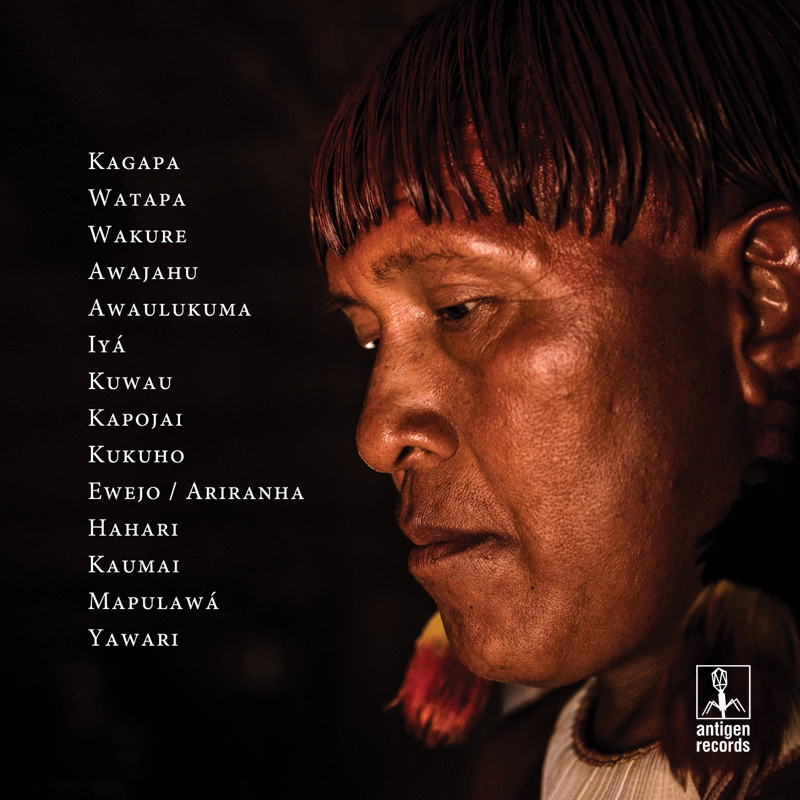
Akari
Wauja Songs from Upper Xingu
14 ritual songs of the Wauja indigenous community of Xingu province in Brazil, sung by Akari and recorded on location in Piyulaga village by Nathaniel Robin Mann (of Dead Rat Orchestra) in 2018.
- Info
- Digital
- Listen
Description
URGENT APPEAL:
Covid-19 poses a unique threat to indigenous communities like the Wauja. Cut off from vital government funding and access to medicine by the Bolsonaro government, the Wauja have been left with no choice but to send members of their villages to the nearest city of Canarana for essential supplies. With Covid-19 infection rates escalating in Brazil, the risk of bringing the disease back to the villages is increasing.
For the Wauja and the 15 other communities in the Xingu Indigenous Territory, the outcome of Covid-19 entering a village is potentially catastrophic, as they have very limited access to medical treatment and it is a 7-hour boat journey to the nearest hospital.
Ferdinand Saumarez Smith of Factum Foundation has set up JustGiving campaign to fund a quarantine station to minimise the risk of Covid-19 transmission to the villages. It will also support the families of designated members of the community who will make the 200km boat trip to Canarana for vital supplies of food, fuel, hygiene items and medicine.
We will donate £10 for every Akari CD sold. This means we are paying for the cost of the CD, packaging and transaction fees out of our own pockets as our contribution to the cause. While we’re busy virtue-signalling, we’ve also gifted 100 CDs to Akari, which he has taken back to Brazil to sell when it is safe to do so.
The CD:
14 ritual songs of the Wauja indigenous community of Xingu province in Brazil, sung by Akari and recorded on location in Piyulaga village by Nathaniel Robin Mann (of Dead Rat Orchestra) in 2018.
Music has historically played a central role in Wauja culture as an essential component of all communal activities. Akari has expressed how important it is for him to record these songs for future generations, to keep alive the history and traditions of the Wauja, and to share the music with people who know nothing of their culture.
This is not coffee table music for casual European listeners. These are songs deeply rooted in the complex mytho-cosmology of the Wauja people. Music is the domain in which the Wauja commune with the apapaatai – invisible supernatural beings who clothe themselves in the forms of animals, plants, musical instruments and natural phenomena. The apapaatai are liminal spirit doubles, rarely glimpsed, except in fevers and in the tobacco smoke of shamanic trances. Some apapaatai, like Kuwau, can be encouraged to participate in rituals that bring fun and joy to the community. Others, such as Wakure, Awaulukuma and Awajahu, cause illness by abducting souls or inserting ensorcelled objects into the bodies of their victims.
Akari draws from a vast repertoire of vocal music learned from recordings made of his father by anthropologist Emilienne Ireland in the 1980s. On this record, he performs songs to accompany rituals of dancing and joking, songs to honour the dead and songs used to heal the sick by appeasing the apapaatai.
Limited edition glass-mastered CD, with a 16-page booklet, explaining the ritual context of each song in Akari’s own words, with an introduction by Patricia Rodrigues. Packaged in a recycled jewel cases, recovered from unsold warehouse stock.
-
Bandcamp